
This time of year is where TrainingPeaks anxiety usually spikes. Winter training brings accumulated fatigue, disrupted routines, missed or shortened sessions, and the general grind of trying to stay consistent when motivation isn’t sky-high. That’s often when athletes start staring at numbers and colours a little too closely. So consider this a timely reset on how to read your data without letting it mess with your head.How to Read TrainingPeaks Without Losing Your Mind
This also reflects how I coach. I use data to inform decisions, not to bully athletes into compliance. The goal is long-term progress, durability, and consistency — not perfect weeks on a screen.
TrainingPeaks is a useful tool, but it’s very easy to misuse it. Athletes often start treating it like a scorecard rather than what it actually is: a way to organise training and spot trends over time. When that happens, perfectly solid training can suddenly feel like failure just because a number or colour doesn’t line up.
TrainingPeaks doesn’t know how you slept, how stressful your week was, or whether you were fighting off a cold. It doesn’t know if work was chaotic, if family life took priority, or if you simply needed to back off. It only knows what data was uploaded. That’s why it can never judge whether a session was good or bad. Interpreting that still requires a human brain.
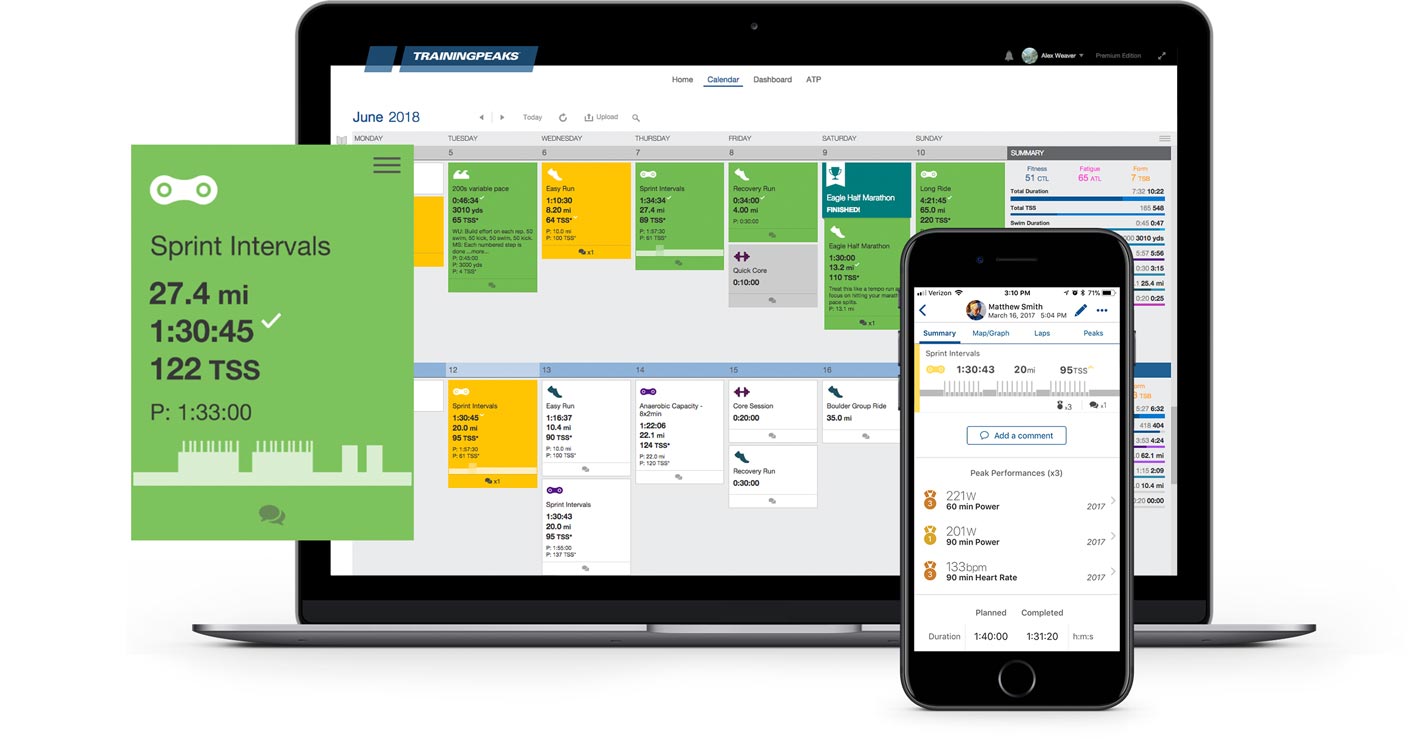
The colours in TrainingPeaks are a good example of where athletes get tripped up. Green, yellow, and red boxes are not grades. A green session simply means the planned and actual stress were similar. Yellow means they were close. Red means they were different. Different does not mean wrong. Sometimes a red session means you adjusted sensibly, trained to feel instead of force, or made a smart call when something didn’t feel right. That’s not failure, that’s experience.
Training Stress Score is another number that often gets overvalued. TSS measures load, not quality. You can hit a high TSS by slogging through a session badly, and you can get a great training effect from a relatively modest score if the session was executed well. Chasing TSS for its own sake is no different to chasing mileage with no purpose. The more important question is always whether the session achieved what it was designed to do.
Longer-term metrics like CTL, ATL, and Form are there to show trends, not to be checked obsessively day to day. Fitness builds slowly, fatigue accumulates quickly, and form is simply the relationship between the two. Looking at these numbers every day and attaching emotion to them is a fast way to lose perspective. They are best used to understand patterns, manage recovery, and avoid digging holes over time.
Consistency is where progress actually comes from. Calm, repeatable weeks where most of the training gets done will always beat occasional hero weeks followed by exhaustion and missed sessions. TrainingPeaks rewards stacking weeks together, not winning individual workouts. Showing up regularly, even when life gets busy, matters far more than perfect execution.
Finally, remember that your body is always the primary data source. Numbers can guide you, but how you feel, how you recover, and how sessions link together tells the real story. If the data suggests one thing but your body clearly says another, the body wins. There’s no prize for ignoring warning signs.
Used properly, TrainingPeaks is a mirror, not a whip. That’s how I use it as a coach, and how I want athletes to use it too. We look for trends, learn from patterns, and adjust when real life inevitably gets in the way.
The aim is never perfect data. The aim is to build athletes who can train consistently, stay healthy through the grind, and show up ready when it actually matters. If the process is solid, the numbers will take care of themselves.
— Coach Rav


0 Comments